
Knowing how to protect car paint is one of the best ways to keep your vehicle looking newer for longer. Every day, automotive paint is exposed to rock chips, road debris, UV rays, bird droppings, insects, tree sap, weather, and other environmental contaminants.
Fortunately, modern vehicle protection goes far beyond traditional wax. From paint protection film and ceramic coatings to proper washing techniques, there are several effective ways to preserve your vehicle’s factory finish.
This guide explains how to protect your car’s paint, which protection methods work best, and how to choose the right solution for your vehicle.
Knowing how to protect car paint is one of the best ways to keep your vehicle looking newer for longer. Every day, automotive paint is exposed to rock chips, road debris, UV rays, bird droppings, insects, tree sap, weather, and other environmental contaminants.
Fortunately, modern vehicle protection goes far beyond traditional wax. From paint protection film and ceramic coatings to proper washing techniques, there are several effective ways to preserve your vehicle’s factory finish.
This guide explains how to protect your car’s paint, which protection methods work best, and how to choose the right solution for your vehicle.
Why Is It Important to Protect Car Paint?
Your vehicle’s paint does more than make the car look good. It also protects the underlying body panels from exposure to the environment.
Over time, daily driving can cause:
- Rock chips
- Light scratches and swirl marks
- Bug stains
- Bird dropping stains
- Tree sap contamination
- Road grime
- UV exposure
- Chemical contamination
- Paint fading and deterioration
Preventing damage is generally easier than correcting it after it occurs.
Protecting the original factory paint can also help maintain the overall condition and appearance of the vehicle over time.
Your vehicle’s paint does more than make the car look good. It also protects the underlying body panels from exposure to the environment.
Over time, daily driving can cause:
- Rock chips
- Light scratches and swirl marks
- Bug stains
- Bird dropping stains
- Tree sap contamination
- Road grime
- UV exposure
- Chemical contamination
- Paint fading and deterioration
Preventing damage is generally easier than correcting it after it occurs.
Protecting the original factory paint can also help maintain the overall condition and appearance of the vehicle over time.
What Is the Best Way to Protect Car Paint?
There is no single solution that works for every vehicle owner. The best protection depends on the type of damage you are trying to prevent.
The most common options include paint protection film, ceramic coatings, waxes, sealants, and proper vehicle maintenance.
There is no single solution that works for every vehicle owner. The best protection depends on the type of damage you are trying to prevent.
The most common options include paint protection film, ceramic coatings, waxes, sealants, and proper vehicle maintenance.
Paint Protection Film
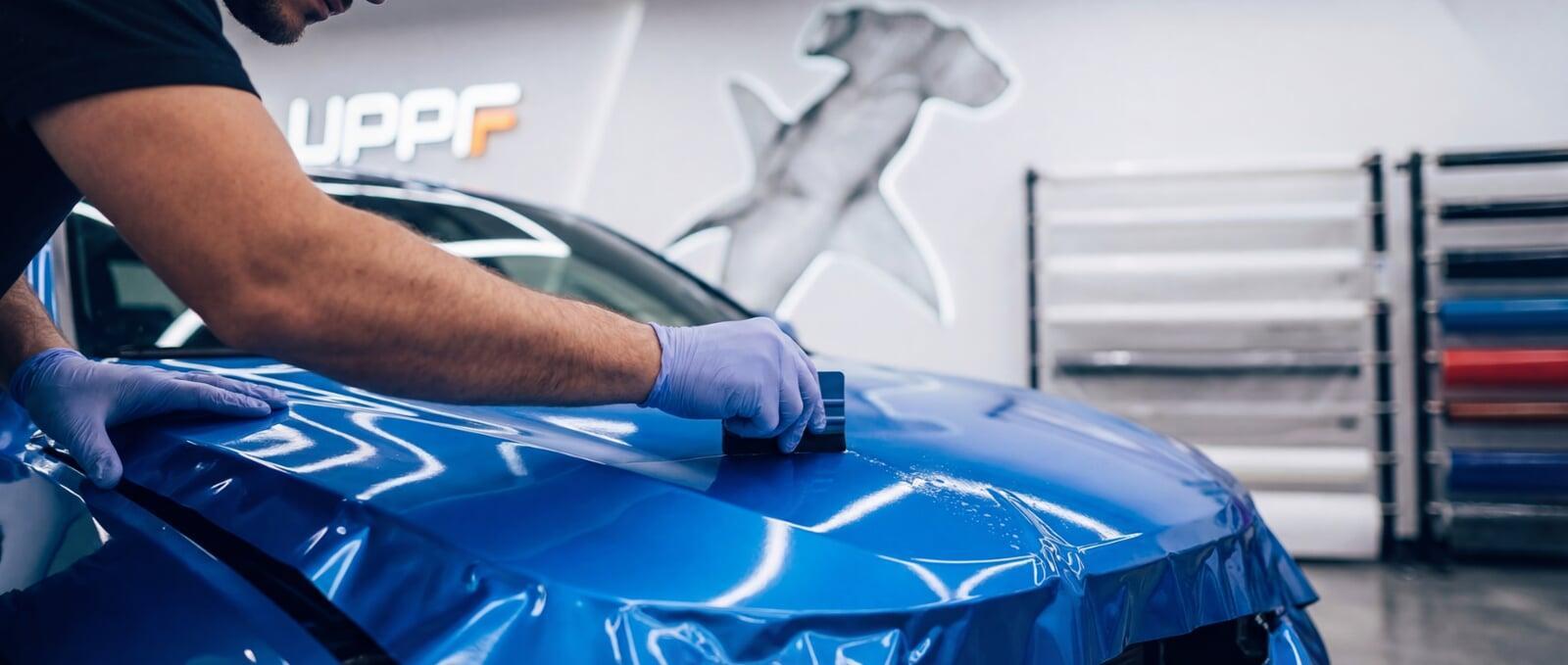
Paint protection film, commonly called PPF, provides a physical protective layer over the vehicle’s painted surfaces.
Premium PPF is typically manufactured using thermoplastic polyurethane, or TPU. The film is designed to absorb impacts from small rocks, gravel, road debris, and other everyday hazards before they reach the factory paint.
Modern films can also include advanced hydrophobic and self healing top coats.
Products such as UPPF Hammerhead Clear Paint Protection Film provide nearly invisible protection while allowing the vehicle’s original paint finish to remain visible.
For drivers primarily concerned about rock chips and physical paint damage, PPF is one of the most comprehensive protection options available.
Paint protection film, commonly called PPF, provides a physical protective layer over the vehicle’s painted surfaces.
Premium PPF is typically manufactured using thermoplastic polyurethane, or TPU. The film is designed to absorb impacts from small rocks, gravel, road debris, and other everyday hazards before they reach the factory paint.
Modern films can also include advanced hydrophobic and self healing top coats.
Products such as UPPF Hammerhead Clear Paint Protection Film provide nearly invisible protection while allowing the vehicle’s original paint finish to remain visible.
For drivers primarily concerned about rock chips and physical paint damage, PPF is one of the most comprehensive protection options available.
Ceramic Coating
Ceramic coatings create a thin protective layer over the vehicle’s exterior.
They are particularly useful for improving:
- Hydrophobic performance
- Surface slickness
- Gloss
- Ease of cleaning
- Resistance to certain environmental contaminants
However, ceramic coatings do not provide the same level of physical impact protection against rock chips as paint protection film.
Some vehicle owners combine PPF with a compatible ceramic coating for additional surface performance.
Ceramic coatings create a thin protective layer over the vehicle’s exterior.
They are particularly useful for improving:
- Hydrophobic performance
- Surface slickness
- Gloss
- Ease of cleaning
- Resistance to certain environmental contaminants
However, ceramic coatings do not provide the same level of physical impact protection against rock chips as paint protection film.
Some vehicle owners combine PPF with a compatible ceramic coating for additional surface performance.
Automotive Wax and Sealants
Traditional waxes and modern paint sealants can provide additional gloss and temporary surface protection.
They may help protect against water, dirt, UV exposure, and light environmental contamination, but they generally require more frequent reapplication than PPF or ceramic coatings.
Wax also does not provide meaningful protection against rock chips or significant physical impacts.
Traditional waxes and modern paint sealants can provide additional gloss and temporary surface protection.
They may help protect against water, dirt, UV exposure, and light environmental contamination, but they generally require more frequent reapplication than PPF or ceramic coatings.
Wax also does not provide meaningful protection against rock chips or significant physical impacts.
How Paint Protection Film Helps Protect Car Paint
For drivers looking for stronger physical protection, PPF creates a barrier directly over the painted surface.
This barrier can help protect against:
- Rock chips
- Gravel
- Road debris
- Insect impacts
- Minor scratches
- Light abrasions
- Environmental contamination
Premium paint protection films may also feature self healing technology. Minor surface marks within the top coat can become less noticeable when exposed to warmth.
UPPF’s PPF Collections include protection options designed for different vehicle finishes and owner preferences.
For drivers looking for stronger physical protection, PPF creates a barrier directly over the painted surface.
This barrier can help protect against:
- Rock chips
- Gravel
- Road debris
- Insect impacts
- Minor scratches
- Light abrasions
- Environmental contamination
Premium paint protection films may also feature self healing technology. Minor surface marks within the top coat can become less noticeable when exposed to warmth.
UPPF’s PPF Collections include protection options designed for different vehicle finishes and owner preferences.
Which Parts of a Car Should You Protect?
You do not necessarily need to protect every panel of your vehicle.
Some areas receive significantly more impact than others.
High impact areas commonly protected with PPF include:
- Front bumper
- Hood
- Front fenders
- Side mirrors
- Rocker panels
- Door edges
- Areas behind the wheels
A full front PPF package is popular for drivers who want to protect the areas most exposed to road debris.
Full body PPF provides more comprehensive protection by covering most or all painted exterior surfaces.
You do not necessarily need to protect every panel of your vehicle.
Some areas receive significantly more impact than others.
High impact areas commonly protected with PPF include:
- Front bumper
- Hood
- Front fenders
- Side mirrors
- Rocker panels
- Door edges
- Areas behind the wheels
A full front PPF package is popular for drivers who want to protect the areas most exposed to road debris.
Full body PPF provides more comprehensive protection by covering most or all painted exterior surfaces.
How to Protect Car Paint From Rock Chips
Rock chips are especially common for vehicles that regularly travel on highways or around construction zones.
The most effective way to physically protect paint from rock chips is to create a durable barrier between the road debris and the painted surface.
Paint protection film is specifically designed for this purpose.
While ceramic coatings, waxes, and sealants can improve surface protection and maintenance, they are too thin to absorb impacts in the same way as PPF.
For maximum protection, consider applying PPF to high impact areas or the entire vehicle.
How to Protect Car Paint From the Sun
Long term exposure to sunlight can contribute to paint deterioration and fading.
Several habits can help reduce exposure:
- Park in a garage or shaded area when possible
- Keep the vehicle clean
- Remove contaminants promptly
- Use automotive protection products designed for exterior surfaces
- Maintain protective films and coatings according to manufacturer recommendations
High quality paint protection products can provide another layer between the vehicle’s finish and environmental exposure.
Long term exposure to sunlight can contribute to paint deterioration and fading.
Several habits can help reduce exposure:
- Park in a garage or shaded area when possible
- Keep the vehicle clean
- Remove contaminants promptly
- Use automotive protection products designed for exterior surfaces
- Maintain protective films and coatings according to manufacturer recommendations
High quality paint protection products can provide another layer between the vehicle’s finish and environmental exposure.
How to Protect Car Paint From Bird Droppings and Bugs
Bird droppings, insects, tree sap, and similar contaminants should be removed as soon as reasonably possible.
Allowing contaminants to remain on the surface for extended periods can increase the chance of staining or surface damage.
When cleaning:
- Avoid aggressively rubbing dried contaminants
- Use plenty of water or appropriate automotive cleaning products
- Use clean microfiber towels
- Avoid harsh household chemicals
Hydrophobic protective surfaces can also make contaminants easier to remove during regular washing.
Bird droppings, insects, tree sap, and similar contaminants should be removed as soon as reasonably possible.
Allowing contaminants to remain on the surface for extended periods can increase the chance of staining or surface damage.
When cleaning:
- Avoid aggressively rubbing dried contaminants
- Use plenty of water or appropriate automotive cleaning products
- Use clean microfiber towels
- Avoid harsh household chemicals
Hydrophobic protective surfaces can also make contaminants easier to remove during regular washing.
Proper Washing Helps Protect Your Paint
Even a protected vehicle needs proper washing.
Poor washing techniques can introduce scratches and swirl marks over time.
For safer maintenance:
- Use a clean microfiber wash mitt
- Use automotive shampoo rather than household detergent
- Rinse loose dirt before making contact with the paint
- Avoid aggressive scrubbing
- Use clean microfiber towels for drying
- Keep washing equipment clean
Vehicles with PPF should also be washed carefully around film edges to reduce unnecessary stress on the installation.
Even a protected vehicle needs proper washing.
Poor washing techniques can introduce scratches and swirl marks over time.
For safer maintenance:
- Use a clean microfiber wash mitt
- Use automotive shampoo rather than household detergent
- Rinse loose dirt before making contact with the paint
- Avoid aggressive scrubbing
- Use clean microfiber towels for drying
- Keep washing equipment clean
Vehicles with PPF should also be washed carefully around film edges to reduce unnecessary stress on the installation.
What to Look for in Paint Protection Film
If you decide to use PPF to protect your vehicle, consider several factors before choosing a product.
If you decide to use PPF to protect your vehicle, consider several factors before choosing a product.
TPU Quality
Premium thermoplastic polyurethane provides flexibility, impact resistance, and durability.
Premium thermoplastic polyurethane provides flexibility, impact resistance, and durability.
Top Coat Technology
Advanced top coats can provide hydrophobic performance, stain resistance, chemical resistance, and self healing properties.
UPPF Hammerhead Clear features Platicoat™ top coat technology designed to support long term surface performance.
Advanced top coats can provide hydrophobic performance, stain resistance, chemical resistance, and self healing properties.
UPPF Hammerhead Clear features Platicoat™ top coat technology designed to support long term surface performance.
Clarity
For clear PPF, the film should preserve the appearance of the underlying paint with minimal visual distortion.
For clear PPF, the film should preserve the appearance of the underlying paint with minimal visual distortion.
Finish
PPF is available in more than traditional gloss.
Depending on the product, drivers can choose gloss, satin, matte, and other specialty finishes.
PPF is available in more than traditional gloss.
Depending on the product, drivers can choose gloss, satin, matte, and other specialty finishes.
Warranty
A strong manufacturer warranty can provide additional confidence in the expected performance of the film.
UPPF Hammerhead Clear Series is backed by a 10 year factory warranty.
A strong manufacturer warranty can provide additional confidence in the expected performance of the film.
UPPF Hammerhead Clear Series is backed by a 10 year factory warranty.
Why Professional PPF Installation Matters
Paint protection film installation requires careful surface preparation and precise application.
Professional installers are trained to work around complex body lines, curves, trim, sensors, and panel edges.
A professional installation typically includes:
- Vehicle inspection
- Thorough surface cleaning
- Film pattern preparation
- Precise positioning
- Proper film stretching and alignment
- Edge finishing
- Final inspection
Poor installation can result in contamination, lifting edges, excessive stretching, or an uneven appearance.
For the best results, work with an experienced UPPF Premier Dealer.
Paint protection film installation requires careful surface preparation and precise application.
Professional installers are trained to work around complex body lines, curves, trim, sensors, and panel edges.
A professional installation typically includes:
- Vehicle inspection
- Thorough surface cleaning
- Film pattern preparation
- Precise positioning
- Proper film stretching and alignment
- Edge finishing
- Final inspection
Poor installation can result in contamination, lifting edges, excessive stretching, or an uneven appearance.
For the best results, work with an experienced UPPF Premier Dealer.
Is Protecting Your Car Paint Worth It?
For many vehicle owners, protecting the original paint can be worthwhile, particularly when the vehicle is new or will be kept for several years.
Paint protection may be especially beneficial if you:
- Drive frequently on highways
- Regularly encounter construction or road debris
- Own a new vehicle
- Own a luxury, sports, exotic, or collector car
- Want to preserve the original factory paint
- Want to reduce visible wear from daily driving
- Plan to keep the vehicle long term
The right solution depends on how you use your vehicle and what type of damage concerns you most.
For many vehicle owners, protecting the original paint can be worthwhile, particularly when the vehicle is new or will be kept for several years.
Paint protection may be especially beneficial if you:
- Drive frequently on highways
- Regularly encounter construction or road debris
- Own a new vehicle
- Own a luxury, sports, exotic, or collector car
- Want to preserve the original factory paint
- Want to reduce visible wear from daily driving
- Plan to keep the vehicle long term
The right solution depends on how you use your vehicle and what type of damage concerns you most.
Frequently Asked Questions
What is the best way to protect car paint?
For physical protection against rock chips and road debris, paint protection film is one of the strongest options. Ceramic coatings, waxes, and sealants can provide additional benefits for surface maintenance and environmental protection.
For physical protection against rock chips and road debris, paint protection film is one of the strongest options. Ceramic coatings, waxes, and sealants can provide additional benefits for surface maintenance and environmental protection.
How can I protect my car paint from rock chips?
Paint protection film creates a physical layer between road debris and your vehicle’s paint, making it particularly effective for areas such as the front bumper, hood, fenders, and mirrors.
Paint protection film creates a physical layer between road debris and your vehicle’s paint, making it particularly effective for areas such as the front bumper, hood, fenders, and mirrors.
Does ceramic coating prevent rock chips?
Ceramic coating is not designed to provide significant impact resistance against rocks. PPF provides substantially more physical protection against rock chips.
Ceramic coating is not designed to provide significant impact resistance against rocks. PPF provides substantially more physical protection against rock chips.
Is PPF better than wax?
They serve different purposes. Wax can provide temporary gloss and surface protection, while PPF creates a thicker physical barrier designed to help protect against rock chips, scratches, and road debris.
They serve different purposes. Wax can provide temporary gloss and surface protection, while PPF creates a thicker physical barrier designed to help protect against rock chips, scratches, and road debris.
Can PPF damage car paint?
Quality PPF can generally be professionally installed and removed without damaging properly maintained factory paint. Repainted surfaces may require additional consideration.
Quality PPF can generally be professionally installed and removed without damaging properly maintained factory paint. Repainted surfaces may require additional consideration.
How long does paint protection film last?
Premium PPF can provide protection for many years depending on film quality, installation, environmental exposure, driving conditions, and maintenance.
Premium PPF can provide protection for many years depending on film quality, installation, environmental exposure, driving conditions, and maintenance.
Should I protect a brand new car?
Installing protection while the factory paint is still in excellent condition can help preserve its appearance before significant road damage occurs.
Installing protection while the factory paint is still in excellent condition can help preserve its appearance before significant road damage occurs.