
5% Tint vs 20% Tint: Legal Guidelines, Advantages, and Expert Tips
If you’re deciding between 5% tint vs 20% tint for your car, understanding their differences is crucial for both aesthetics and legality. This detailed guide explores how these tint percentages compare, what to consider for legal compliance, and how to choose the best premium automotive window film such as UPPF for your needs. Whether you want privacy, style, or sun protection, we break down every factor to help U.S. car owners make an informed choice.
Understanding Window Tint Percentages
Before diving into 5% and 20% tints, it’s helpful to understand what these numbers actually mean. The percentage refers to the Visible Light Transmission (VLT) of the window film – that is, how much visible light the film lets through into the cabin.
- 5% Tint (commonly called "limo tint") allows only 5% of visible light to pass through. It gives windows a very dark appearance, maximizing privacy.
- 20% Tint allows 20% of visible light to come in, leaving the windows dark but not as extreme as 5%.
The lower the VLT, the darker the film. Premium brands like UPPF offer advanced ceramic window films in both 5% and 20% variations, ensuring superior performance without sacrificing style.
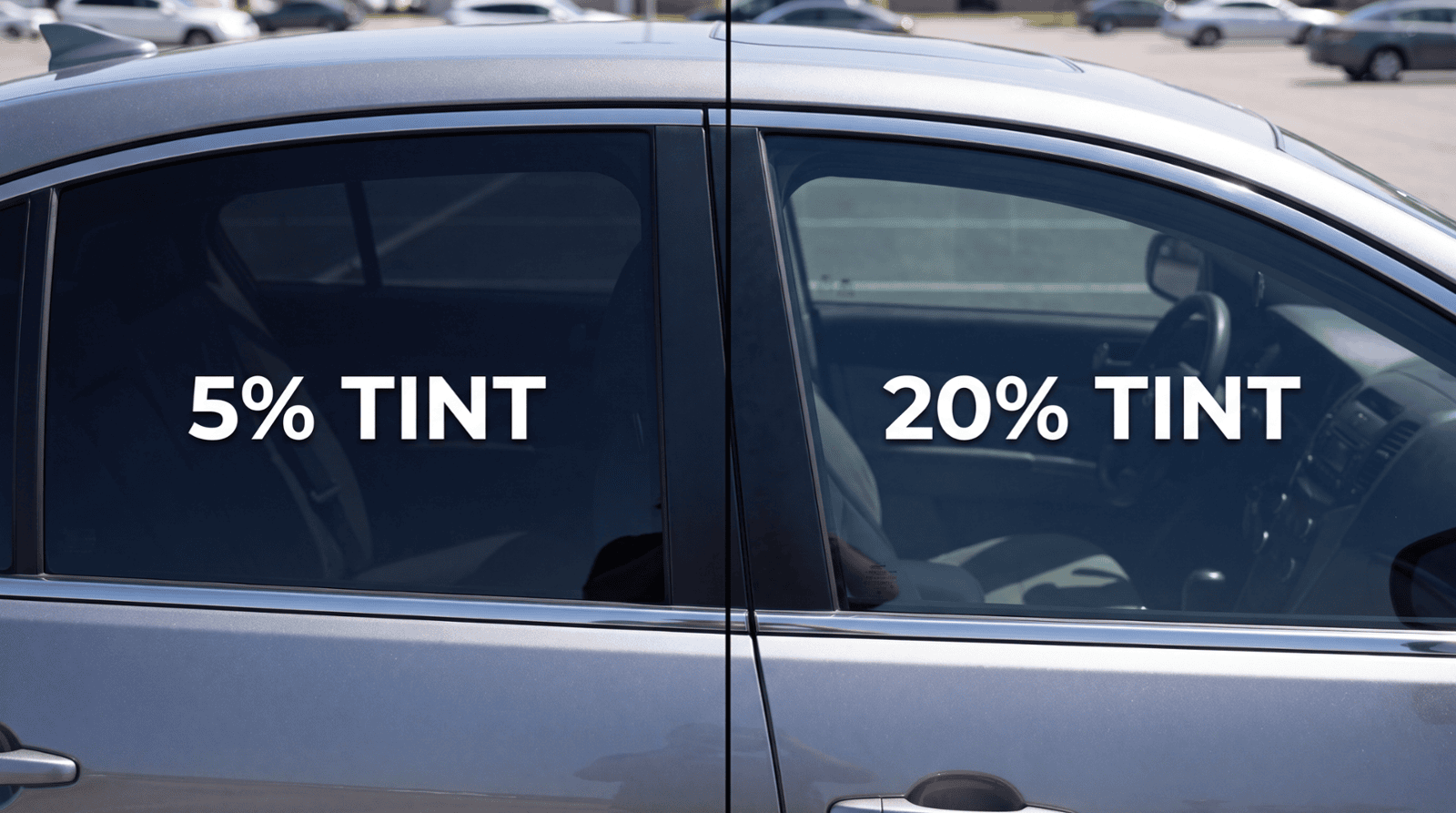
5% Tint vs 20% Tint: Visual and Functional Differences
One of the top reasons drivers compare 5% tint vs 20% tint is the dramatic difference in privacy, appearance, and interior heat control. Here’s a breakdown of how they stack up:
- Privacy: 5% provides maximum privacy; it is nearly impossible to see inside during the day. 20% still delivers privacy but permits more outside visibility.
- Night Visibility: 20% is much safer for nighttime driving since it allows more light through, while 5% can reduce rear and peripheral visibility, especially in low-light conditions.
- Heat and UV Blocking: Modern tints like Manta Ceramic C05 (5%) and Manta Ceramic C20 (20%) from UPPF are engineered to block over 99% of UV rays and significant heat, regardless of darkness. The VLT primarily impacts visible light, not infrared or UV protection, when premium films are used.
- Style: 5% gives a true limousine effect, while 20% maintains a factory-tinted look that often matches SUV and pickup rear privacy glass.
Use the Window Tint Simulator to visualize the difference on your exact vehicle.
Legal Considerations: Is 5% or 20% Tint Allowed in Your State?
One of the most important aspects of choosing between 5% and 20% tint is ensuring compliance with U.S. state tint laws. Regulations vary widely, not only by state, but also by vehicle type and window location.
- Front Side Windows: In most states, 5% tint is considered too dark and is illegal for front side windows of passenger vehicles. The legal VLT for these windows ranges from 20% to 50% depending on where you live.
- Rear Side and Back Windows: Some states are more lenient for rear vehicle glass. Here, a 20% tint is legal in many states, while 5% is usually only allowed on certain vehicles, such as limousines or commercial cars.
- Medical Exemptions: Drivers with medical conditions sensitive to light may apply for waivers in some states, permitting them darker tints than otherwise allowed by law.
Always verify the current tint laws in your state before installing either 5% or 20% film. Window tint tickets can result in fines and be a hassle during inspections or vehicle sales.
How to Choose Between 5% and 20% Tint for Your Vehicle
Aside from legal requirements, selecting the right window film depends on your driving habits, safety needs, and style preferences. Here’s how to determine which shade is right for you:
- Consider Your Driving Environment: City drivers may prefer 20% for better visibility in parking garages or at night, while rural or sunny-climate drivers may benefit from 5% on rear windows for maximum glare and heat reduction.
- Assess Your Privacy Needs: If you regularly keep valuables in your car, darker tint offers more peace of mind. However, 20% still delivers strong privacy on most vehicles.
- Safety First: Ensure your rearward and side visibility is not compromised, especially if you do a lot of nighttime driving, towing, or parallel parking.
- Brand Matters: Choose a premium film for high performance at any darkness level. Films like UPPF Manta Ceramic retain UV, heat, and glare reduction even at lighter shades, so you don’t have to trade safety for comfort.
When in doubt, visiting a UPPF Premiere Dealer can help match the right window tint VLT to your personal and regional needs.
Comparing Premium Window Tint Brands: UPPF and Top Market Leaders
With so many brands on the market, it’s important to select a brand that offers proven performance, high durability, and advanced technology. Below, compare UPPF’s Manta Ceramic films with other leading window tint brands popular in the U.S. market for both 5% and 20% options:
| Feature | Product Type | Protection Level | Durability | Best Use Case |
|---|---|---|---|---|
| UPPF Manta Ceramic (C05/C20) | Nano Ceramic Film | Blocks up to 99% UV & strong IR rejection | Long-term, color-stable | Luxury, high-performance cars; premium installations |
| 3M Crystalline Series | Multi-layer Nano Film | High UV/IR reduction | Highly durable | Drivers who want maximum heat control in any climate |
| Llumar Ceramic IR | Advanced Ceramic | Strong heat and UV blocking | Resistant to fading | Everyday use, original equipment replacements |
All three brands are reputable and deliver performance, but UPPF’s Manta Ceramic stands out for its balance of clarity, protection, and premium finish. Its nano-ceramic construction ensures great visibility even with lower VLT films, making it suitable for enthusiasts and daily drivers alike.
Expert Recommendations for U.S. Car Owners
Ultimately, the choice between 5% and 20% tint comes down to your priorities and local regulations. Here’s what automotive experts recommend:
- Check with a local professional before installation - reputable brands like UPPF work with skilled Premiere Dealers who know current laws and best-fit tint percentages.
- For most daily drivers, 20% provides ideal privacy and safety balance for rear windows and legal compliance for front windows in many states.
- Reserve 5% for specialty vehicles, rear-most windows - especially if you need maximum blocking for heat, sunlight, or prying eyes.
- Prioritize technology over darkness: High-quality ceramic films offer sun and heat protection at lighter shades, giving you flexibility.
For a tailored recommendation, connect with a UPPF Premiere Dealer near you to ensure you get the perfect window tint for your vehicle and location.
Conclusion: Making the Right Choice on 5% Tint vs 20% Tint
Choosing between 5% tint vs 20% tint involves more than just appearance - it’s about legal compliance, comfort, safety, and product performance. Premium automotive films like those from UPPF give you advanced options for both levels of darkness, with superior UV and heat protection whether you go ultra-dark or moderately tinted. Always check your state’s laws and work with a trusted brand for the finest results.
Explore the full spectrum of automotive window tint solutions at UPPF Product Collections and discover the Manta Ceramic C05 for industry-leading protection and style.
Frequently Asked Questions
5% tint is usually too dark for front windows in most states, but may be permitted on rear windows in certain cases. Always check your local tint laws before installation.
In some states, 20% tint is legal on front windows, but many require higher VLT, such as 35% or more. Confirm your state’s regulations for front side glass.
5% tint is much darker than 20%, allowing less visible light into the cabin and providing maximum privacy.
Yes, 5% tint can make seeing out of your windows much more difficult at night, impacting safety when driving in low light.
Many states allow medical exemptions for those requiring additional sun protection, but an application process is usually required.
Yes, advanced ceramic films offer strong heat and UV rejection even at higher VLT percentages, so you don’t need a super dark tint for comfort.
You can use online window tint simulators to preview different darkness levels on your specific vehicle model.