
If you’ve been shopping for paint protection film, you’ve probably heard installers talk about “wet install” and “dry install.” Some people assume one is always better. The truth is simpler: the best method depends on the film type, the panel shape, and the installer’s technique.
At UPPF USA, we work with certified installers every day. Here’s a clear breakdown of what wet and dry PPF installation actually mean, when each method makes sense, and how to make sure your film looks clean and stays down long term.
Wet vs dry PPF installation: quick comparison
| Factor | Wet install | Dry install |
|---|---|---|
| Positioning control | High | Low |
| Speed | Moderate | Fast in skilled hands |
| Risk of glue lines | Lower when done right | Higher if film grabs unevenly |
| Best for large panels | Yes | Usually not |
| Best for small pieces | Sometimes | Often |
| Complex curves and edges | Wet with tack is common | Can work on certain films, but higher risk |
| Skill requirement | High | Very high |
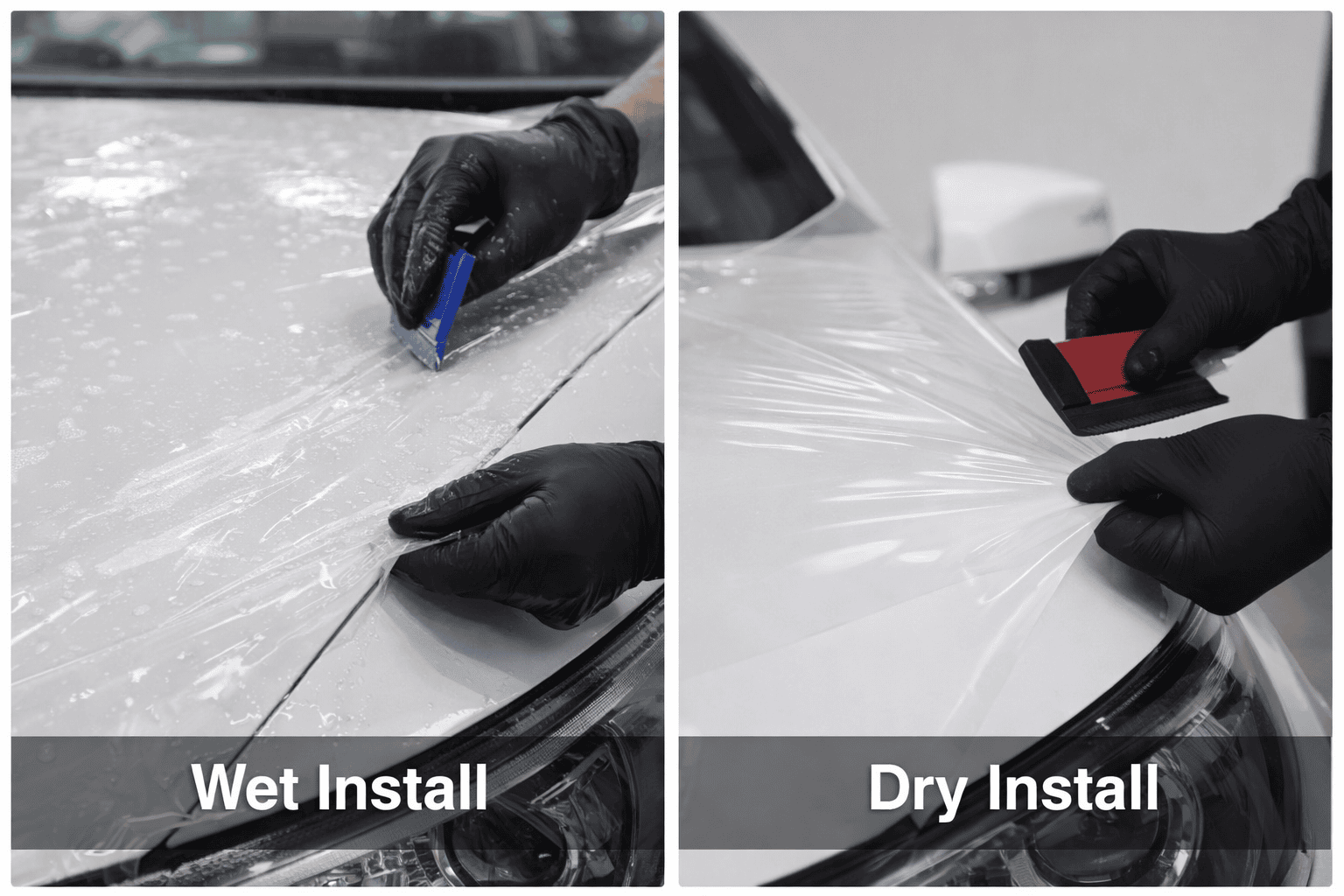
*While these images show wet and dry installation techniques side by side, most professional PPF installations are not strictly one method or the other. Wet installation is commonly used for positioning large panels, while controlled dry or tack techniques are used during edge lock-down and final setting. The exact process depends on the film, panel shape, and installer experience.
*While these images show wet and dry installation techniques side by side, most professional PPF installations are not strictly one method or the other. Wet installation is commonly used for positioning large panels, while controlled dry or tack techniques are used during edge lock-down and final setting. The exact process depends on the film, panel shape, and installer experience.
Which method is better for clear PPF?
For clear PPF, wet installation is usually the safer and more consistent choice, especially on large panels like hoods, doors, and fenders.
Why? Because clear PPF often goes on high visibility areas where any trapped air, misalignment, or adhesive marks stand out immediately. Wet positioning gives your installer time to align body lines, edges, sensors, and seams, then lock the film down cleanly.
A controlled shop environment also matters a lot. Cool panels, clean air, and good lighting help avoid contamination and improve edge stability.
Choose a high quality clear PPF is also crucial for a seamless application. Hammerhead Clear PPF from UPPF is engineered with Platicoat™ technology, making it highly stretchable and easy to install.
Which method is better for color PPF?
Color PPF is where you’ll hear “dry install” discussed more often, mainly because some color films are designed to behave more like wrap material. That does not mean wet install is wrong. It means the best method depends on the exact film, the panel shape, and the installer’s workflow.
If you’re choosing color PPF for a full transformation, the goal is a finish that looks like paint: smooth, tight, and consistent across every panel. That is exactly why professional install matters more than the wet vs dry debate.
The most common mistakes people make with wet or dry installs
1.Treating dry install like a shortcut
Dry install can be fast, but it is not forgiving. On large panels, one wrong touch down can create trapped air, adhesive marks, and alignment issues that force a restart.
2. Over soaking edges
With wet installs, edges can lift later if the installer does not properly lock them down. The fix is clean prep, correct tack control, and careful edge finishing.
3. Installing in the wrong environment
Heat, humidity, and dirty air are the enemies of a clean install. Direct sun and hot panels make the adhesive harder to control and can increase the chance of marks or stretch.
4. Rushing aftercare
Right after installation, moisture can take time to fully clear and edges need time to stabilize. Your installer will give you the correct aftercare for the film used. Follow it closely, especially for the first few days.
What UPPF certified installers typically do
Most high quality installs follow the same principle: control first, speed second.
On large panels, wet positioning provides better alignment and a cleaner finish. On edges, corners, and complex shapes, installers often switch to tack techniques to lock the film down. For certain color PPF applications, your installer may use a hybrid workflow that matches the material’s behavior and the panel complexity.
That’s why the best move as a customer is not to chase a trend like “dry install is better.” Instead, choose a film you trust and a shop that installs it correctly.
Ready to protect your car with UPPF?
If you’re considering clear PPF or a full color transformation, the fastest way to get it done right is to work with a certified installer.
Use our Dealer Locator to find a certified UPPF installer near you, and ask about:
♦Cobia Pure PPF
♦Cobia Satin Color PPF
♦Hammerhead Clear PPF
Want a quote from a local shop? Fill an inquiry here and we’ll help connect you.
Frequently Asked Questions for Wet & Dry Install