
As we approach 2026, the automotive industry in California is closely watching updates to California Window Tint Laws 2026. These laws matter deeply to drivers, auto enthusiasts, and automotive detailing professionals alike, as window tinting not only enhances a car’s appearance but also offers critical protection against sun exposure and privacy concerns. In this definitive guide, we will break down what’s changing, how it impacts your vehicle, provide clear explanations of automotive window films, and offer a premium product comparison featuring trusted brands like UPPF.
Understanding California Window Tint Laws 2026
The California Window Tint Laws 2026 are pivotal for anyone considering tinting their vehicle’s windows. California has always maintained strict regulations to balance driver comfort, safety, and law enforcement visibility. As updates loom, it’s important to understand:
- How much light must pass through each window (Visible Light Transmission, or VLT percentage)
- Where tints are allowed, including side, rear, and windshield glass
- How the law might affect factory and aftermarket window films
Today, sedans, SUVs, and trucks are all subject to unique requirements. Compliance is not just about aesthetics – it’s about avoiding fines and guaranteeing safe road interactions. Staying updated is crucia for individual vehicle owners and auto shops alike, as these standards often evolve to incorporate new technology and safety concerns.
Key Legal Considerations for Window Tinting in California
While final details for California Window Tint Laws 2026 may be announced closer to implementation, some historical trends remain steady. California statutes traditionally allow:
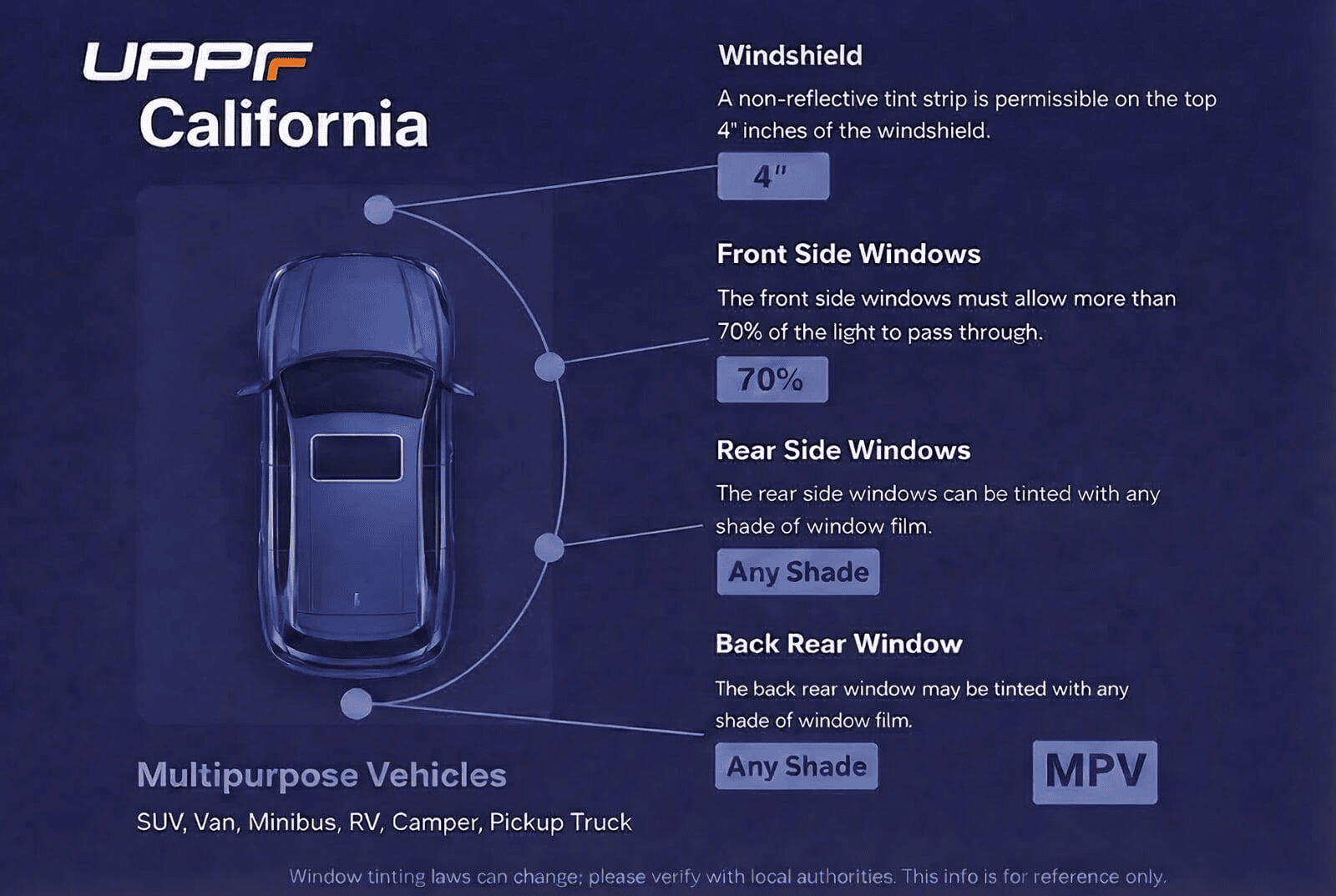
- No tint (or very light tint) on the front windshield, except for the top 4 to 5 inches (the “visor strip”)
- Front side windows to allow more than 70% of outside light in
- No restrictions or darker tints for rear windows and back windshield, especially for SUVs and vans
For specialty applications, such as vehicles with medical exemptions, deeper tint darkness may be permitted but requires a process for approval. Always check the California Highway Patrol or local DMV for the official and most recent legislative documents.
While most of the law focuses on VLT percentage, reflectivity and color restrictions may also apply. California generally bans red, blue, or amber tint colors for safety reasons. Compliance requires choosing premium-quality films that deliver the desired performance without legal risks.
Premium Window Tint Brands: UPPF vs. Top Market Alternatives
Choosing a window tint product means weighing durability, heat rejection, clarity, legal compliance, and appearance. Here’s a high-level look at how UPPF compares to other recognized premium brands:
| Feature | Product Type | Protection Level | Durability | Best Use Case |
|---|---|---|---|---|
| UPPF Manta Ceramic | Ceramic Window Tint | UV, Infrared, Glare | Long-term (high scratch resistance) | Luxury, High-Performance Cars |
| 3M Crystalline | Multilayer Optical Film | High UV/IR Block, Clarity Focus | Premium longevity | Maximum Heat Rejection, OEM Upgrades |
| Llumar FormulaOne Pinnacle | Ceramic Window Tint | UV, Heat, Glare | Long-lasting, Color-Stable | Daily Drivers, Family Vehicles |
| SunTek CIR | Ceramic Window Tint | Infrared, UV Rejection | High Durability | SUVs, Trucks, Hot Climates |
UPPF stands out due to its advanced nanotechnology ceramic films that excel in heat reduction and clarity, especially in the Manta Ceramic Series. This makes UPPF a premium choice for those who demand both comfort and style while staying within California’s evolving legal requirements. When compared to 3M Crystalline and Llumar FormulaOne, UPPF’s emphasis on scratch resistance and color stability is ideal for customers prioritizing longevity and high-end visuals.
The Impact of Window Tinting on Automotive Protection and Comfort
Understanding the functional benefits of window tinting goes well beyond aesthetics. Here’s how high-quality films like those from UPPF directly impact driver experience:
- UV Protection: Modern ceramic tints can block over 99% of harmful UV rays, protecting both passengers and interior surfaces.
- Heat Rejection: Advanced film layers help keep the cabin cooler on scorching Los Angeles summer days.
- Glare Reduction: Reduces headlight and sunlight glare without compromising clear visibility, vital for road safety.
- Privacy and Security: Properly applied tints help obscure valuables from outside view, deterring theft while ensuring compliance with visibility laws.
Particularly for drivers in California’s sunny regions, a premium window film is more than a luxury, it can be an essential part of protecting both your investment and your health.
Professional Installation, Warranty, and Legal Compliance
The value of professional installation cannot be overstated. In California, using authorized installers ensures that your tint choice will be measured, applied, and documented to meet all current and anticipated 2026 legal guidelines. These professionals use cutting-edge templates and tools to achieve flawless results, plus you receive:
- Access to full manufacturer warranties (such as those offered by UPPF)
- Assurance that the window tint’s VLT matches California's specific requirements
- Precise application without gaps, bubbles, or misalignments
UPPF, for instance, supports its products with robust warranty programs and a network of certified installers, giving customers peace of mind well after the installation day. For consumers, this means protection from premature fading, peeling, or discoloration- problems most common with lesser brands or DIY jobs.
To explore more options, browse the UPPF Product Collections to discover the latest innovations in tint and paint protection solutions for your vehicle.
Future Trends and Considerations for California Window Tint Laws 2026
While lawmakers are expected to keep safety as the top priority, advances in tint technology might prompt a reconsideration of current standards. Trends to watch include:
- Adaptive Tints: New films may respond to changing light, automatically adjusting their opacity.
- Enhanced Infrared Rejection: Upcoming films will increasingly focus on blocking heat-producing infrared rays for superior comfort.
- Eco-Conscious Materials: The push for greener, longer-lasting, and recyclable automotive products.
As the window tint industry innovates, premium brands like UPPF are positioned to adapt swiftly, introducing compliant film options that deliver maximum protection, modern aesthetics, and legal certainty. Vehicle owners in California should stay informed by working with specialists committed to both technology and compliance.
Conclusion: Making Informed Choices Under California Window Tint Laws 2026
With California Window Tint Laws 2026 signaling change on the horizon, vehicle owners must prioritize both legal compliance and premium protection for their cars. By choosing advanced films from leaders like UPPF and working with certified installation professionals, you safeguard your investment, enhance driving comfort, and avoid costly violations. Always consult current laws and trusted brands to ensure your tint solution is safe, legal, and high performing for years to come.
Frequently Asked Questions
Exact percentages may change, but historically California required at least 70% VLT for front side windows, with no specific limit for the rear. Check the latest CHP or DMV updates closer to 2026.
Generally, 20% VLT is too dark for front side windows but may be allowed on rear windows depending on vehicle classification. Confirm with state regulations before installation.
California law has typically required a 70% VLT on front windows, making 35% too dark. Double-check new rules as 2026 approaches.
For front side windows in California, lighter films are generally required. Rear and back windows may allow darker tint depending on the vehicle type.
Yes, medical exemptions may be granted but require documentation from a licensed physician and approval from the CHP or DMV.
Tint is generally allowed only on the top 4 to 5 inches of the windshield as a visor strip, and it must be non-reflective.
Colored tints such as red, blue, or amber are typically not allowed. It is safest to choose clear or neutral shades that comply with state regulations.
Choose a certified and reputable installer, such as those authorized by UPPF, who are familiar with the latest California window tint requirements.